

The fifth edition of ROSA LUXEMBURG STIFTUNG Senegal’s immersive Climate School was in session from October 27 to November 2, 2025. The gathering brought together young people, women, community leaders, researchers, activists, elected officials, artists, and engaged actors from all regions of Senegal, Europe (France, Germany), and Africa (Madagascar, South Africa, Nigeria, and Mali). This edition, organised by the Rosa Luxemburg Foundation West Africa in partnership with the PNAJC and supported by Écologie Universelle, transformed the territory of Palmarin and its islands into a space of learning, awareness, and transformation.
After the very successful 2024 Climate School in the South Eastern region of Tambacounda where participants had spent a week learning about Bassari indigenous knowledge and challenges (artisanal mining, drought, deforestation), the school was, once again, returning to the Saloum Delta.
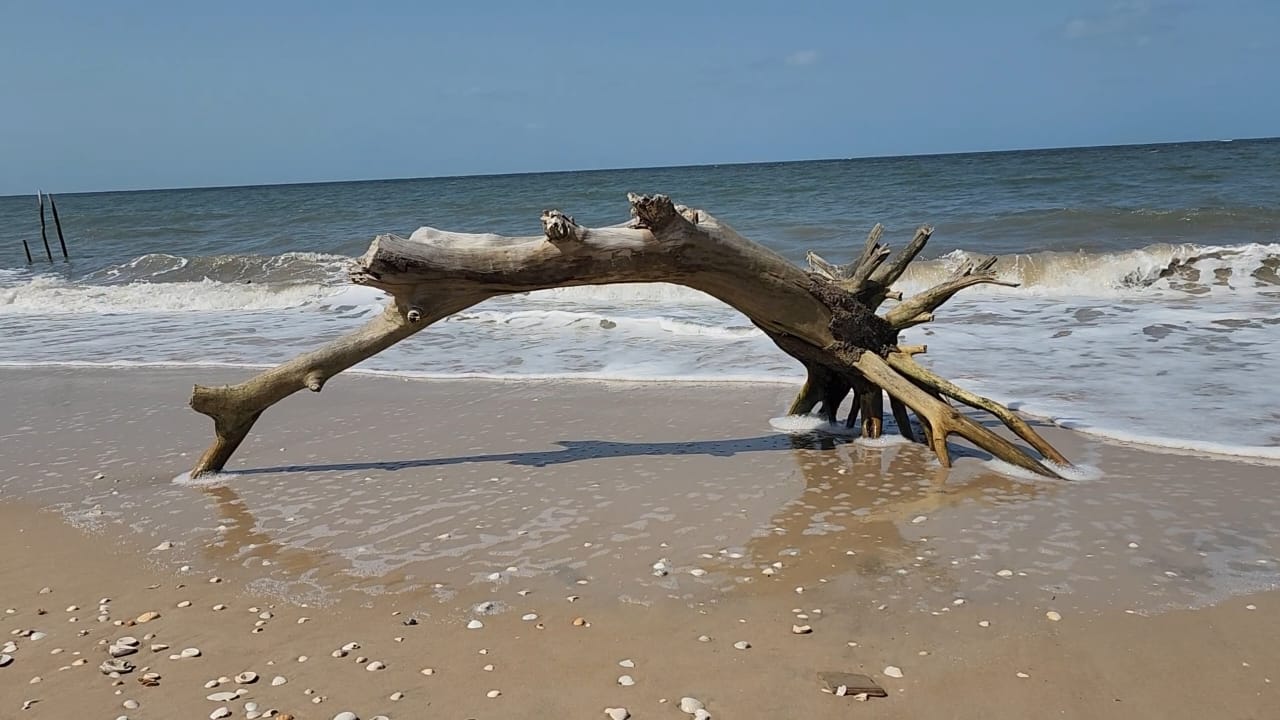
The Saloum Delta (also known as the Sine-Saloum Delta) is a massive, biodiversity-rich river delta in Senegal located in the westernmost part of Senegal where the Saloum and Sine rivers empty into the North Atlantic Ocean, south of the Gambia River estuary and north of the Casamance region. The Delta encompasses a number of administrative regions, including Fatick, Thiès, and Kaffrine, all of which contribute to the broader Sine Saloum territory.
The climate school adopted a unique learning approach built around site visits, cultural exchange, listening, observation, immersion in the spaces of local communities and a multi-stakeholder conference.
The entire group visited the islands of Niodior, Dionewar, and especially Sangomar—ancestral spaces of memory and spirituality where humans and nature coexist in a fragile harmony – parts of which are now threatened by oil drilling (BP is already present to the north of the coast).

The Saloum Delta and its constituent islands are particularly vulnerable to the impacts of climate change. Rising sea levels pose a significant threat to the low-lying deltaic plains and numerous surrounding islands. With rising sea levels, coastal erosion has intensified, leading to the flooding of salt marshes and mangrove areas. This is damaging to agricultural plots, riverine communities, infrastructure and critical habitats. The Island of Fadiouth, known for its shell mounds, faces major challenges getting potable water all year round because storm surges push saltwater into natural freshwater sources. Ocean water surges also mean that areas of cultural significance such as burial sites are particularly difficult to plan.
The last day on the island of Fadiouth started with a visit of the extensive mangrove areas. It was great to see the great diversity of birds coming and going among the trees. There were gasps when the group saw a massive snake in the water.
Later, participants spent time with a women’s co-operative. They visited processing units where the women processed and packaged shrimp, fish, baobab powder, Bissap, squid etc. All the participants then sat down for a meal of Thieboudienne prepared by the village women. The international delegates declared that the “Djollof debates” are a complete waste of time because nothing beats Tchep, where it all started.

After this incredible working experience where the students of the climate school saw for themselves the bravery of local organisations in the face of a changing environment, they recognised the stewardship of local communities that spend a lot of time and effort adapting to and mitigating the effects of climate change.
The 2025 Climate School put together the Saloum Delta Manifesto (see below) affirming the importance of a political ecology for the Saloum Delta based on human networks and justice.
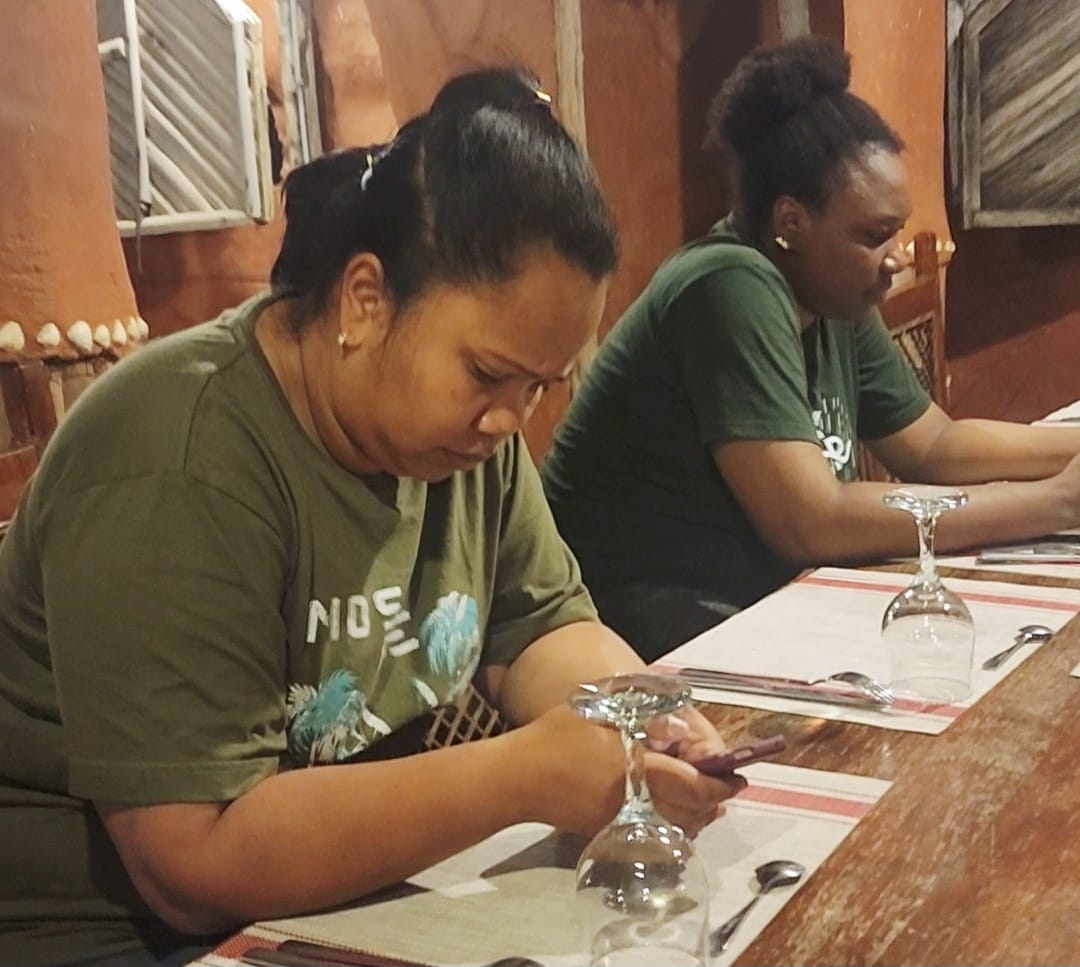
SALOUM DELTA MANIFESTO
For a Just, Rooted, and Biodiversity-Centered Transition
Adopted in Palmarin, October 31, 2025, at the conclusion of the 5th Edition of the Climate School Carried by the Rosa Luxemburg Foundation West Africa, in collaboration with its partners, Écologie Universelle and the National Platform of Actors for Climate Justice (PNAJC).
Preamble: Living Ecology, Living the Territory
During a week of immersion, from October 27 to November 2, 2025, young people, women, community leaders, researchers, activists, elected officials, artists, and engaged actors from all regions of Senegal, from Europe (France, Germany), and from Africa (Madagascar, South Africa, Nigeria, and Mali) gathered in the Saloum Delta for the 5th edition of the Climate School.
This edition, organized by the Rosa Luxemburg Foundation West Africa in partnership with the PNAJC and supported by Écologie Universelle, transformed the territory of Palmarin and its islands into a space of learning, awareness, and transformation.
Participants lived a unique experience: listening, observing, feeling, and understanding the link between nature, culture, and humanity.
We traveled through the islands of Niodior, Dionewar, and Sangomar—lands of memory and spirituality—where humans and nature coexist in a fragile harmony.
We shared local meals, discovered the commitments of women, and observed daily gestures of adaptation. We also saw, with the naked eye, the vulnerabilities: salinization, erosion, loss of land, climate migration.
But we also witnessed strength: solidarity, knowledge, creativity, dignity.
This encounter gives birth to the Saloum Delta Manifesto—a declaration of heart and reason, the fruit of collective work and lived experience—affirming that another ecology is possible: human, rooted, and grounded in justice.
- Climate Justice: Repairing Inequalities, Building Solidarity
The climate crisis is first and foremost a crisis of justice.
African peoples suffer the consequences without being responsible for them.
Climate justice means acknowledging these inequalities while building a shared, dignified, and equitable future.
We call for:
- Ensuring access of vulnerable communities to climate finance and resilience mechanisms.
- Embedding human rights and accountability at the heart of environmental policies.
- Decentralizing climate governance so territories can design their own solutions.
- Promoting a just energy transition that sacrifices neither lands nor peoples.
- Guaranteeing the active representation of women and youth in all decision-making spaces.
- “Climate justice is not a slogan; it is a moral and political imperative.”
- Rights of Indigenous Peoples and Local Communities: Memory, Land, and Dignity
Indigenous peoples and local communities embody the living memory of the Earth. Their relationship with nature is rooted in knowledge, spirituality, and respect.
Protecting them is protecting the planet. We recommend:
- Preserving, documenting, and transmitting Indigenous and community knowledge so it can guide public policy and future generations.
- Protecting ecosystems and Indigenous territories—spaces of culture, spirituality, and life.
- Recognizing Indigenous knowledge as territorial science, to be valued in education, research, and climate planning.
- Promoting local cultures—through gastronomy, arts, languages, and rituals—as expressions of a rooted ecology.
- Strengthening intergenerational transmission so that elders are guides and youth are builders of change.
- “Indigenous peoples and local communities are guardians of the living, not relics of the past.”
- Biodiversity and Climate: Protecting Life, Honoring the Earth
The Saloum Delta, a UNESCO World Heritage site, is a mosaic of life, a lung for West Africa.
But it is now threatened by pollution, erosion, overfishing, salinization, and plans for oil exploration. We demand:
- A ban on all new oil drilling in the Saloum Delta.
- Equitable access of women to land and resource management.
- Integration of environmental education into school curricula at all levels.
- Support for community initiatives in reforestation and ecological monitoring.
- Recognition of the Saloum Delta as a pilot territory for local ecological governance.
- “Protecting the Delta means protecting memory, culture, and life.”
- Climate and Health: One Breath, One World
The health of populations depends on the health of ecosystems.
Waterborne diseases, extreme heat, and biodiversity loss affect collective well-being. An ecology without health is survival without a future.
We propose:
- Adopting a “One Health” approach linking human, animal, and environmental health.
- Strengthening community health infrastructure.
- Protecting water resources from salinization and pollution.
- Raising awareness about links between health and the environment.
- Integrating women and community health workers into adaptation planning.
- “A healthy environment is the first medicine.”
- Sustainable Food and Resilient Agriculture: Nourishing the Earth, Nourishing Life
In the Delta, fishing, farming, and gathering are ancient knowledge systems. But faced with the ecological crisis, communities are reinventing their practices. Agroecology has become their response, their resistance, and their promise.
We call for:
- Supporting peasant agroecology as a pillar of sustainable food sovereignty.
- Facilitating access of youth and women to land and financing.
- Preserving mangroves and promoting sustainable fishing.
- Creating local seed banks and encouraging solidarity-based exchange.
- Promoting short value chains and local products.
- Educating children in sustainable food practices from an early age.
- “To cultivate the Earth without destroying it is to nourish the future.”
- Adaptation and Mitigation: Territories That Invent
Adaptation is lived on the ground, through daily acts.
People of the Delta already experiment with models of adaptation, clean energy, and cooperation.
We recommend:
- Strengthening community capacity to plan and manage climate change.
- Developing local and accessible renewable energy.
- Encouraging South-South cooperation for sharing green innovations.
- Implementing local adaptation plans co-created with communities.
- Promoting a circular and low-carbon economy based on repair, recycling, and reuse.
- “Adaptation does not come from above; it grows where people take root.”
Conclusion: The Call of the Saloum Delta
We, participants of the 2025 Climate School, gathered in Palmarin, having walked the lands of Niodior, Dionewar, and Sangomar, having listened to the voices of women, fishers, elders, and children, issue this Call of the Saloum Delta:
- For an Africa that rises from its territories,
- for an ecology of solidarity, culture, and justice,
- for a humanity that no longer separates humans from nature.
This manifesto is a collective commitment: a commitment to life, courage, and hope. It is our shared promise: to protect, to transmit, and to act.


