
Roland Emmerich’s Day After Tomorrow reminds us that our governments tendentiously prioritise short-term rewards over long-term planning. Urgent action only happens when we are on the edge of the precipice.
There are evolutionary biases within many institutions that push them to respond to immediate challenges rather than making investments in the future we all want. There isn't necessarily anything wrong with solving immediate problems, but just as we have evolved a variety of insurance mechanisms, we need to be doing the same for the planet. Many people complain about paying insurance until they personally need a bailout of some sort.
The Conference of the Parties was created to rein in anthropogenic CO2 emissions. When the Paris Agreement was signed, it was clear to all that emissions needed to be kept below 1.5 degrees relative to preindustrial levels.
Additionally, money was promised to developing nations for adaptation and mitigation. Another pillar - loss and damage - was also added to strengthen the efforts of developing nations in terms of preparing for impacts that can no longer be averted.

Unfortunately, the world seems incapable of honouring its promises. The superpowers are not even pretending when it comes to reporting their Nationally Determined Contributions.the rightwards lurch of the politics in some countries has foreclosed the idea of bringing the sum total of our activities within planetary boundaries.
Worse still, the Conference of the Parties itself has been captured and is slowly being devoured from inside by cynical parties and PR firms adept at creating theatre, performance, make-believe.
How else do you explain the unanimous decision to cap warming at 1.5 degrees and then everyone blows right past it without any serious consequences?
How else do we explain handing over the COP process to major polluters?
How else do we explain the heavy loans that are being given out in the name of adaptation finance?
Worse still, COP gatherings have become a giant tourism bazaar that some countries now fight over. Turkiye for example literally begged to organise CO31 although Australia will chair the event?
To understand why countries that have zero commitment to reducing climate change are queuing up to host COP summits, think about this:
At least 70 000 people attended the People’s Summit and COP30 in Belém. There were about 70 000 delegates in Baku for COP29. In Dubai, at COP28, over 100 000 people made the journey.
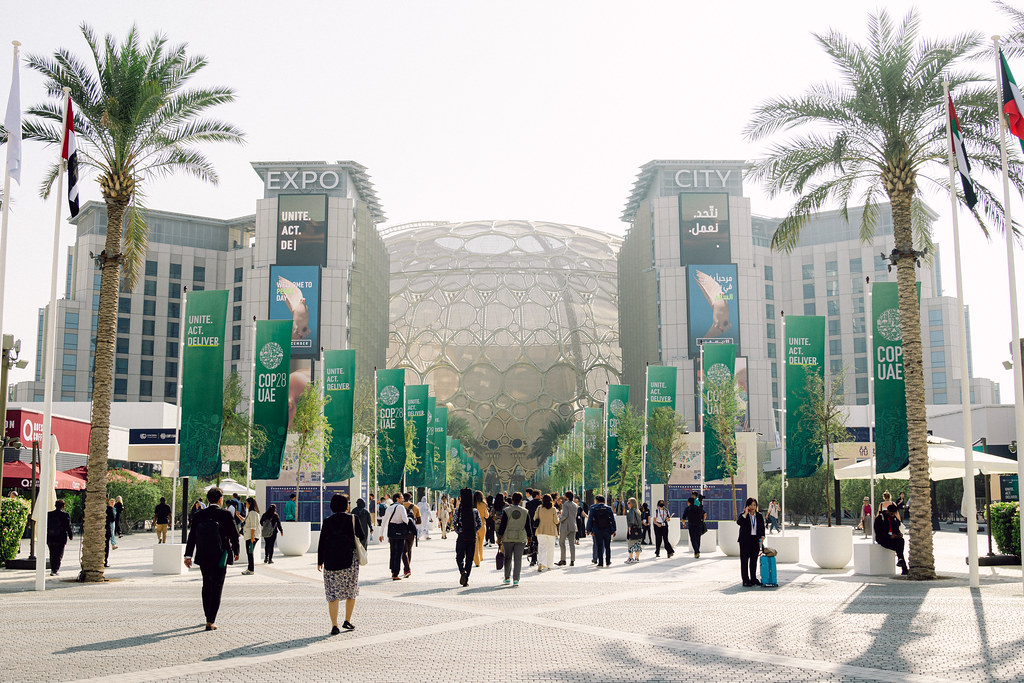
Now, suppose 70 000 people attend a COP event and everyone of them is paying around 1000 USD for a ticket. That is 70 000 USD, a massive windfall for countries that have a major airlines. Now seven days in a hotel at 250 USD per person per day is 1750 USD per person or 122 500 000 for 70 000 people. The rooms are never that cheap by the way, at least not for 60% of the attendees.
Now if you continue this calculation with the daily meals, taxi rides, tourism, pre-summit trips, long-term benefits of showing off a country’s attractions and conferencing capabilities, good PR for a regime and so on, you start to see what is going on.
Although the Brazilian COP President was saying the other day that change typically happens only incrementally and we should not be too quick to slam the process, we must remember that President Lula had told everyone who cared to listen that COP30 was the COP to save all COPs. And here we are.
If the convoluted beast that COPhas become is not streamlined urgently, then it is only going to get worse. COP has become a fourre-tout partly because world governments are happy with the opportunity for some tourism and theatre.
Something serious needs to change. If Civil Society Organisations are not front and centre in the negotiations, it is only going to get worse.


